Public Speaking, Forgotten Places, and Why I Tell the Stories-
When I speak at author events or give presentations about my photography, there’s one thing I try very hard not to do: make myself out to be some kind of heroic historian riding in to save forgotten places from disappearing. That’s not really why I do it. I explore forgotten places because I love the hunt.
There’s something about finding an abandoned building, an old motel, a shuttered business, or some piece of the landscape that time has mostly passed by that pulls me in. I like the texture. The light. The colors. The architecture. The overall scene. Sometimes I don’t even know what the place was when I first see it, and honestly, that’s part of the fun.
Then I get curious. Who was here? What happened here? Why did this place close? Who owned it? What did it look like when it was busy? Who remembers it? The history makes the experience richer.
It doesn’t necessarily have to become part of a book or a blog post or a presentation. Sometimes I just want to know. If I’m standing in an abandoned building in the middle of nowhere, knowing something about the people who once occupied that space changes the way I see it. The photograph becomes more than an interesting building. There’s suddenly a story attached to it.
And when there are still locals around who remember the place, that’s even better.
Some of my favorite stories have come from simply talking to people. You can research something online and find dates and facts, but a person who was actually there can tell you what the place felt like. They remember the little things that never make it into a history book. That’s the kind of history I love.
Bringing the Audience Along-
That also influences the way I write and speak about my adventures. I don’t want somebody looking at one of my photographs while I stand in front of a room and simply give them a list of facts about it. I want them to feel like they were there with me.
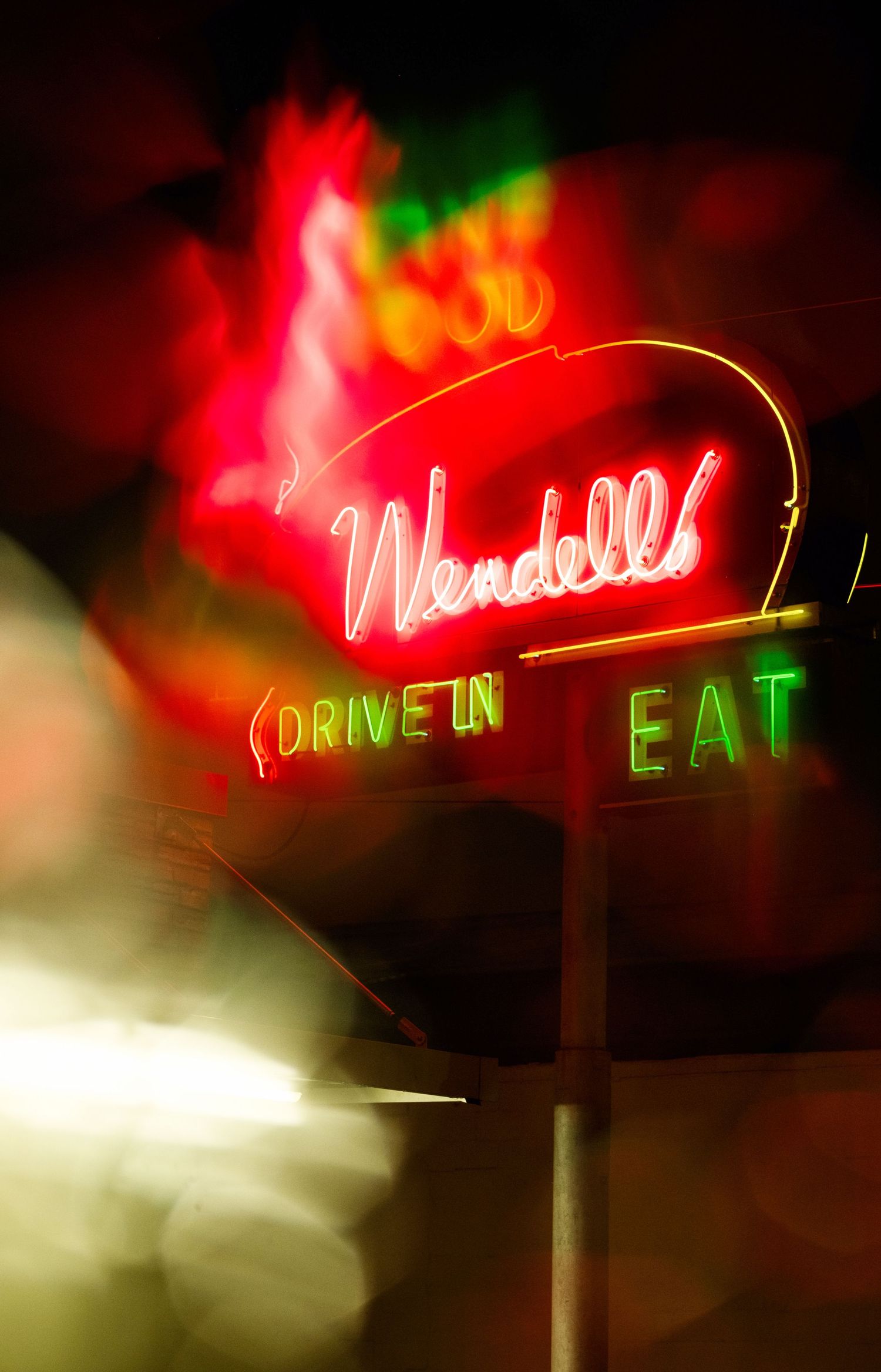
I want them to hear the wind blowing through an empty building. Smell the dust and old wood. See the faded neon. Feel the heat coming off the pavement. Hear the screen door slam somewhere down the road. I want them to know what I saw when I walked around the corner and discovered something I wasn’t expecting.
The photograph is the starting point, but the experience surrounding it is the story. That’s probably why sensory details are so important to me. They give the audience something to grab onto. Instead of simply telling them what I photographed, I can tell them what it was like to stand there. And suddenly they’re not looking at a photograph anymore. They’re standing beside me.
Reading the Room-
Of course, that’s easier said than done. One of the hardest parts of giving a presentation is figuring out who’s sitting in front of you.
Some audiences want history. Some want photography. Some want the travel stories. Some want to know how I found a particular location. And occasionally you get a room where you’re trying to figure out exactly what the hell they’re interested in.
You have to read the room.
That’s something I’ve gotten better at with experience, but I don’t think you can completely script it. A presentation isn’t a recorded lecture. It’s a conversation with a room full of people who happen to be sitting quietly.
And there’s another thing I’ve learned: I’m at my best when I’m simply myself.
I don’t try to sound like a historian. I don’t try to manufacture some grand mission. I don’t try to convince people that I’m doing something noble. I talk about what I love doing. I talk about the places I’ve found, the things I’ve seen, the people I’ve met, the photographs I’ve made, and the strange little discoveries that make me want to keep getting in the car and heading down another road.
If I’m genuinely excited about something, that excitement usually comes through. And I think people respond to that much more than they respond to somebody standing in front of them trying to convince them how important they are.
The Adventure Is the Point-
Ultimately, the photographs and the stories are really just pieces of a larger adventure. Sometimes I find something spectacular. Sometimes I drive two hours to photograph a place that turns out to be a complete bust. Sometimes I find a building I never knew existed. Sometimes somebody tells me a story that completely changes how I see a photograph I’ve already made. That’s what keeps it interesting.
I’m not trying to save every abandoned building. I’m not trying to preserve every piece of history. I’m exploring because I’m curious. I’m photographing because I love the way these places look and feel. And when I discover the story behind them, it gives me another reason to care about what I’m seeing.
When I get the opportunity to stand in front of an audience and share those experiences, my job isn’t to tell people what they should think about them. It’s to open the door and invite them along. The rest is up to them. Thank you for the support! Many more appearances to come.